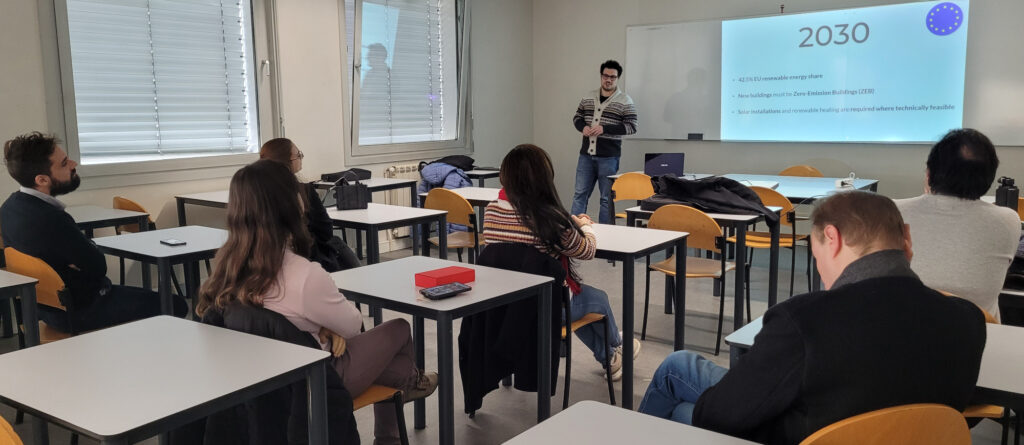
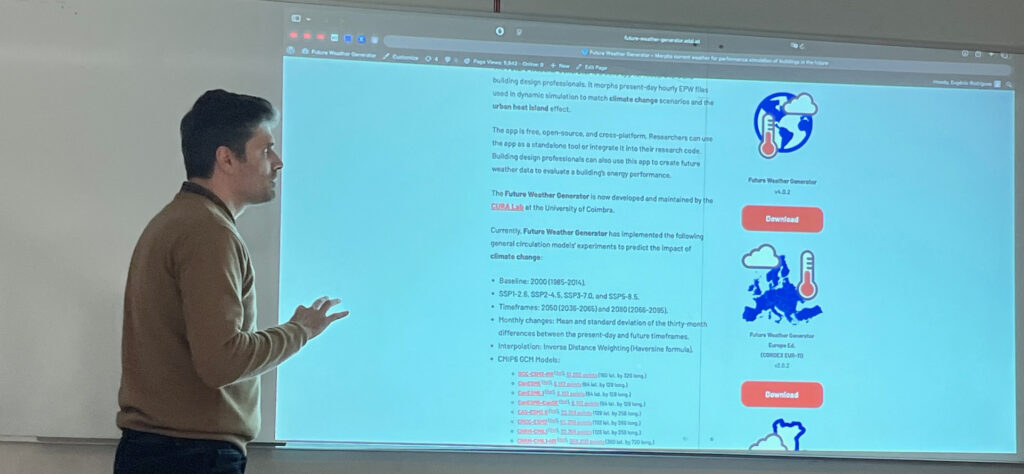
On Friday, 19 December 2025, the CLING project formally concluded with a closing seminar at FEUP that brought together researchers and collaborators to reflect on the project’s scientific achievements, knowledge transfer activities, and long-term impact. The event also marked the public release of the CLING eBook, consolidating the project’s main outcomes and design recommendations.
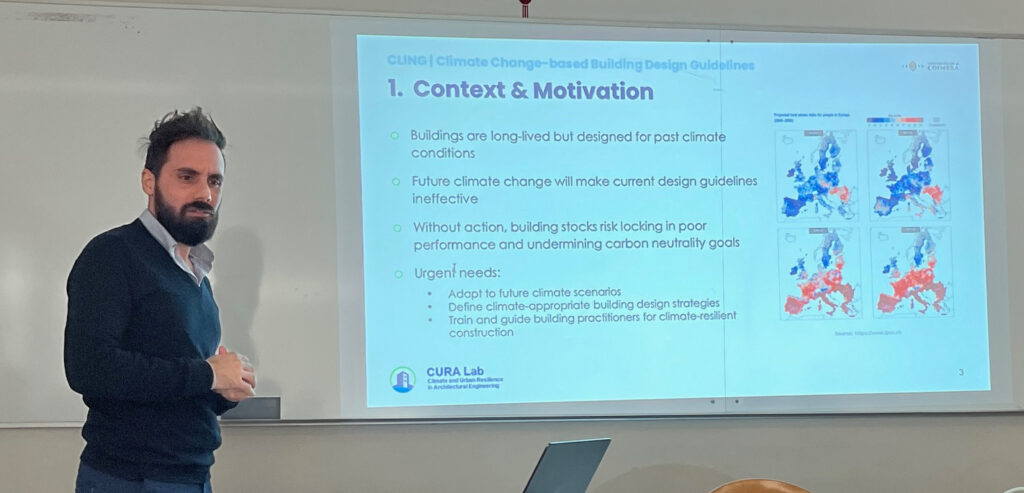
Climate change is reshaping the way buildings perform. Rising outdoor temperatures, more frequent heat extremes, and changing weather patterns are expected to significantly increase cooling demand, exacerbate overheating risks, and challenge indoor environmental quality. At the same time, the long lifespan of buildings means that design decisions made today will determine energy use, emissions, and resilience for decades.
The CLING project addressed this challenge by recognizing three urgent needs:
- current building design guidelines are not adequate for future climates;
- design recommendations must be climate- and region-specific; and
- building professionals must be equipped with tools and knowledge to design for climate change.
CLING was developed as a co-promotion partnership led by ADAI, with CMUC, CESAM, and CONSTRUCT. This interdisciplinary collaboration integrated expertise in mechanical and environmental engineering, climatology, architecture, civil engineering, and applied mathematics. Beyond research, the project invested strongly in training and outreach, through workshops, invited lectures, and academic supervision, ensuring that climate change–based design knowledge reaches both professionals and students.
By translating climate projections into actionable building design guidance, CLING helps prevent the lock-in of suboptimal building performance and supports national and international climate goals. The project directly contributes to the United Nations Sustainable Development Goals 11 (Sustainable Cities and Communities) and 13 (Climate Action).
As the project concludes, its tools, datasets, and guidelines remain available to inform research, practice, and policymaking—supporting a built environment that is more resilient, energy-efficient, and aligned with a warming world.